



Categories: Postpartum, Pregnancy, Pumping
March 30, 2026
Last updated on March 30, 2026
By Sarah Wells, Founder, Sarah Wells Bags

Supporting breastfeeding lives at the intersection of logistics, workplace culture, public policy, and emotional reality.
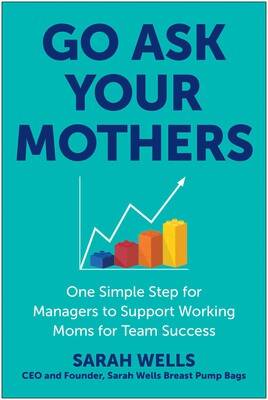
As the founder of Sarah Wells Bags and the author of Go Ask Your Mothers, I have spent over a decade listening to the lived experiences of breastfeeding parents, especially those returning to work. What I have learned is this: breastfeeding support begins with what is on a parent’s mind long before they walk back into their workplace.
Before a return-to-work date even arrives, many parents are already carrying a quiet checklist in their heads:
- Where will I pump?
- Will anyone resent the time I need?
- Will my meetings run over?
- How will I store milk safely?
- What if I have low supply that day?
- What happens when I travel?
- Will I look less committed?
- Will I still be seen as leadership material?
- What if my baby refuses a bottle?
- What if I cannot keep this up?
These are not minor worries. They are structural pressures that shape feeding decisions, career decisions, and mental health.
In Go Ask Your Mothers, I write about how often we expect mothers to solve systemic problems with personal resilience. We tell them they are strong. We tell them they can do hard things. And they can. But strength should not be the primary infrastructure supporting a national workforce.
Breastfeeding is not simply a personal health choice. It is deeply connected to economic participation.
When a parent does not feel supported in pumping at work, the ripple effects are significant. It affects retention, absenteeism, productivity, and long-term workforce engagement. Parents who feel understood and accommodated are more likely to return with confidence and stay. Parents who feel unsupported often make decisions based on survival rather than choice.
Over the past several years, legal protections have strengthened for pumping parents. Laws such as the PUMP Act and the Pregnant Workers Fairness Act have clarified that lactation accommodations are not optional. That progress matters.
But policy on paper is not the same as lived experience in practice.
Advocacy for breastfeeding parents is both offense and defense. We fight for new protections, and we defend the ones we already have. Yet even strong laws require cultural translation inside workplaces.
- Does a manager proactively ask what support looks like?
- Is pumping time treated as a normal part of the workday?
- Are lactation spaces accessible without stigma?
- Is travel policy realistic?
- Do partners receive leave that helps distribute caregiving more equitably?
Supporting breastfeeding parents is not about special treatment. It is about building systems that recognize caregiving as part of modern workforce participation.
When employers understand that pumping exists within a broader mental load, their approach shifts from compliance to leadership. And that shift benefits everyone.
Healthcare providers and lactation support organizations also play a powerful role in this ecosystem. Often, they are the first structured support a family receives in their feeding journey. That trust creates an opportunity to validate not only feeding technique, but the full experience of returning to work while sustaining lactation.
When healthcare providers, educators, employers, and policymakers align around a message of support, parents feel it. When they do not, parents carry the burden alone.
If we want breastfeeding parents to thrive rather than simply endure, we have to widen the lens. We need accessible equipment, clear protections, supportive workplace culture, shared caregiving norms, and open conversations about lactation and mental health.
Breastfeeding is often treated as a private issue. In reality, it is structural.
When a parent thrives at work, families are stronger. Businesses retain talent. Communities benefit. Supporting breastfeeding parents is not only about feeding goals. It is about building a workforce that reflects the reality of modern caregiving.
To learn more, visit sarahwellsbags.com
You can also find Go Ask Your Mothers on Amazon.